
Best Mattress for Weekend Camper Trips: 2026 Guide

Last Updated: October 22, 2026
Quick Summary
The best mattress for weekend camper trips is a lightweight foam mattress sized to your sleeping platform, because foam sets up in under five minutes and outperforms air pads in cold weather. Foam also absorbs movement and noise, which matters on a two-night trip where one bad night is half the weekend.
- Foam mattresses set up in under five minutes, while air mattresses take five to fifteen minutes to inflate.
- Measure the platform at the head, middle and foot, plus the narrowest door opening the mattress must pass through.
- Medium-firm memory foam is a sensible default for weekend warriors, though side sleepers should lean softer.
- Lift the mattress and vent the camper when packing up to stop condensation dampening the foam.
- Nomad Mattress offers a 90-day sleep trial and a 20-year limited warranty on its standard sizes.
Table of Contents
- Why a Dedicated Camper Mattress Beats a Regular One
- Foam vs Air vs Hybrid: Which Camper Mattress Type Fits Your Trip
- What Makes a Lightweight Camper Mattress Worth It
- How to Choose a Camper Mattress for Short Trips
- Fit, Setup, and Storage: What Weekend Campers Overlook
- Moisture, Ventilation, and Noise in a Small Sleeping Space
- Why Nomad Mattress Suits Weekend Camper Trips
- Frequently Asked Questions
Why a Dedicated Camper Mattress Beats a Regular One
The best mattress for weekend camper trips is a sleep surface built for a vehicle, not a bedroom: lighter, easier to move, and shaped to fit a fixed sleeping platform.
Here is the part most guides skip. At Nomad Mattress, we build for the vehicle first: Thermo-Adaptive foam, standard RV and sleeper cab sizes, and a design that moves without fighting you.
Buying a full bedroom mattress for a camper is the most common and most expensive mistake we see. It usually costs more, weighs more, and still does not fit the platform properly.
Foam vs Air vs Hybrid: Which Camper Mattress Type Fits Your Trip
Foam wins for weekend camper trips. A HEST comparison of camping mattress materials found foam mattresses outperform inflatable pads in cold weather, and OutdoorGearLab’s testing of 18 camping mattresses rated foam-based models as more comfortable and supportive than traditional inflatables.
| Type | Setup Time | Comfort | Packed Size | Best For |
|---|---|---|---|---|
| Foam | Under 5 minutes | High | Fixed, moderate | Weekend camper trips |
| Air | 5-15 minutes | Low to medium | Very small | Extreme portability |
| Hybrid | Under 5 minutes | High | Fixed, bulky | Long-term RV living |
Air mattresses still have one honest advantage: you can deflate them into almost nothing. If storage is your only constraint, that trade-off is real. For everyone else, foam is the better weekend companion.
What Makes a Lightweight Camper Mattress Worth It
A lightweight camper mattress is worth it when it cuts setup effort without cutting support. CleverHiker’s 800 nights of field testing found that material density and thickness drive sleep quality more than brand or price.
Weight is the number weekend campers ask us about most. Lighter foam means faster setup, easier under-bed access, and less strain on your payload budget.
Weigh your current mattress before you shop. Most people are surprised by how much a standard mattress adds, and that number tells you exactly how much room you have to work with.
How to Choose a Camper Mattress for Short Trips
Choosing a camper mattress for short trips comes down to four checks, in this order: fit, thickness, temperature, and weight.
- Measure the sleeping platform length and width, not the old mattress
- Pick thickness based on sleeping position: side sleepers need more cushioning
- Confirm the foam handles temperature swings, not just summer heat
- Check the weight against your payload budget
- Confirm the warranty and trial before you buy
Girl Camper’s guide to matching mattresses to travel styles recommends medium-firm memory foam for weekend warriors who camp for short stretches. That is a sensible default. Side sleepers should lean softer for pressure relief at the shoulder and hip.
Fit, Setup, and Storage: What Weekend Campers Overlook
Fit is where weekend camper trips are won or lost, and it is the step most buyers rush. National Mattress guidance on RV sizing notes that standard queen, full, and twin sizes fit most recreational vehicles, which removes the need for specialized sizing in most campers. That is good news: a standard size is cheaper, easier to replace, and simpler to live with than anything bespoke.
How to measure a camper sleeping area properly
Measure the platform, not the old mattress. Old mattresses compress, sag, and shift, so their dimensions lie. Run a tape along the longest clear length and the widest clear width at the height the mattress will actually sit, then repeat at the head and foot, camper platforms are rarely perfectly square. Note three things competitors usually skip:
- Wheel wells and storage lockers that intrude into the footprint. A mattress that overhangs a wheel well will not sit flat, and a mattress that covers a locker door blocks access you will want every trip.
- Height clearance above the platform. Measure from the platform to the ceiling or cabinet underside; a thick mattress can eat the headroom you need to sit up.
- Door and hatch openings. The mattress has to get in. Measure the narrowest opening the mattress must pass through, not just the platform.
Write the numbers down and compare them to the published dimensions of any mattress you consider. If your sleeping area has an unusual shape, email info@nomad-mattress.com with measurements and a photo and we will tell you honestly what will work. Nomad Mattress sells standard sizes only.
Setup time: what a weekend trip actually demands
On a two-night trip, setup effort is multiplied by every arrival and every pack-down. A mattress you can lift alone and slide into place takes minutes. A heavy one turns every trip into a two-person job and a reason to skip the trip.
A realistic weekend routine looks like this: unlock, slide the mattress into place, dress it with bedding, and you are done, under five minutes for a foam mattress you can handle solo. Air mattresses invert that math: five to fifteen minutes of inflation on arrival and the same again deflating and folding on departure, often in the dark or the rain. Over a season of short trips, that difference adds up to hours.
Storage: the constraint weekend campers underestimate
Storage is the one honest advantage air mattresses hold: deflated, they pack into almost nothing. Foam mattresses have a fixed footprint, so plan where the mattress lives when the camper is parked. Two workable patterns:
- Leave it in place. If the platform is dedicated sleeping space, the mattress can stay made up between trips. This is the lowest-effort option and the reason many weekend campers choose foam.
- Store it flat or on edge. Foam should not be stored compressed for long periods, and it should not be folded sharply. A flat shelf, a spare bed, or standing on edge in a dry space preserves the foam.
Weigh your current mattress before you shop. Most people are surprised by how much a standard mattress adds, and that number tells you exactly how much room you have to work with, both in payload and in the space you need to store it.
Measure the platform at three points, check the door opening, and buy a standard size wherever it fits. Then plan where the mattress lives between trips before you buy, not after.
Nomad Mattress builds standard RV and sleeper cab sizes that cover most campers without special ordering, and the lightweight construction means one person can move it in and out without help.
Moisture, Ventilation, and Noise in a Small Sleeping Space
Moisture is the quiet killer of camper mattresses, and it is the topic almost every buying guide skips. Condensation forms when warm, moist air, from your breath and body, meets a cold surface. In a compact camper, the platform under the mattress is often the coldest surface in the vehicle, so moisture collects right where the mattress sits. A sleeping surface with no airflow stays damp, and damp foam loses loft, smells musty, and degrades faster.
A practical moisture routine for short trips
You do not need equipment to manage this. You need a routine:
- Lift the mattress when you pack up. Even ten minutes of air exposure on departure helps the platform and the underside of the mattress dry.
- Let the platform breathe between trips. Leave the mattress off the platform, or propped, when the camper is parked at home.
- Vent the camper on arrival. Open a window or hatch for a few minutes before bed to flush humid air.
Breathability and open-cell foam construction help here. So does a mattress you can actually lift and air out, which is another argument for keeping the weight down, a mattress too heavy to lift is a mattress that never gets aired.
Noise and motion transfer in a shared space
Noise matters just as much as moisture in a small shared sleeping space. Air mattresses creak and shift through the night, and every movement sends a ripple across the surface, which is why couples on weekend camper trips tend to prefer foam. Foam absorbs movement rather than transmitting it, so a partner rolling over is far less disruptive.
Three things to check before you buy:
- Surface noise. Some air mattresses and pad covers crinkle with every shift. Foam is quiet.
- Motion transfer. Lie on one side and have someone move on the other. Foam isolates movement; air does not.
- Edge support. In a narrow camper berth, you will roll toward the edge. A mattress with weak edges wakes you up; a supportive foam edge keeps you centered.
Why this matters more on weekend trips
On a long trip, one bad night is absorbed by the ones around it. On a two-night weekend, one damp or noisy night is half the trip. That is why Nomad Mattress prioritizes breathable, open-cell Thermo-Adaptive foam and a lightweight build you can lift and air out, the two things that most directly reduce moisture and noise in a compact camper. A 90-day sleep trial also means you can test how the mattress behaves in your own camper, in your own climate, before committing.
Why Nomad Mattress Suits Weekend Camper Trips
Nomad Mattress is built for exactly this use case. Our mattresses are made in Canada with Thermo-Adaptive foam that regulates temperature across seasons, so a hot afternoon parked in the sun does not turn into a sleepless night.
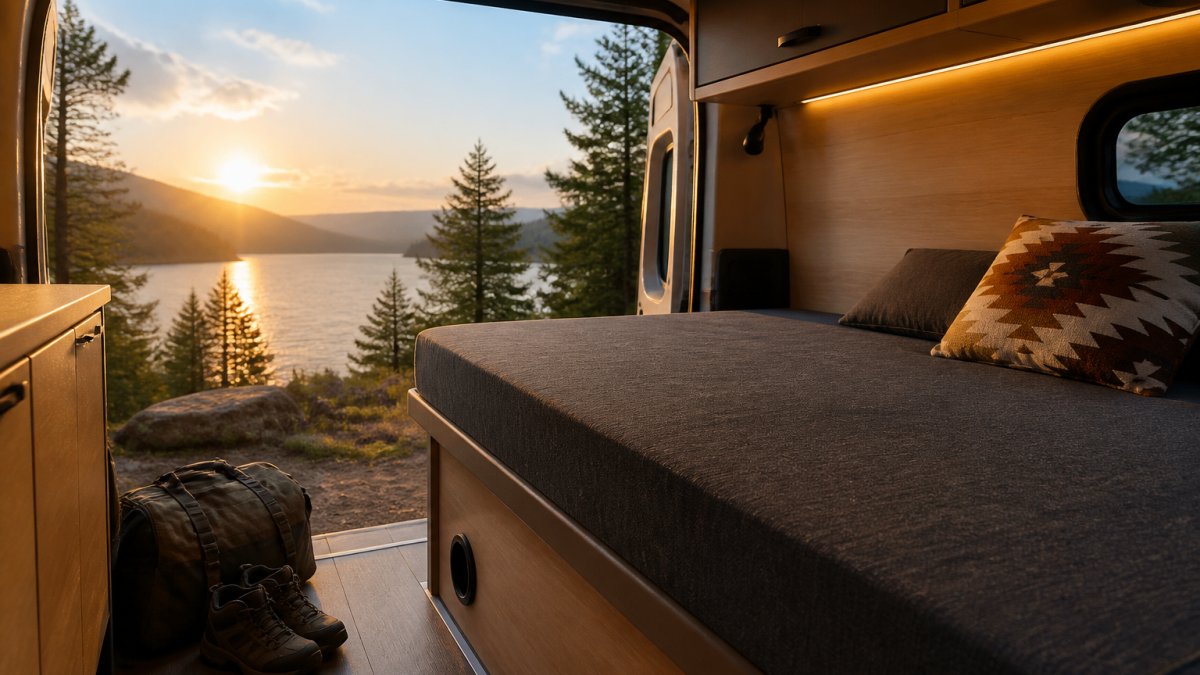
Three things make Nomad Mattress the best mattress for weekend camper trips in our view. First, the mattresses are genuinely lightweight and portable, so setup and storage take minutes. Second, they are strong value for the build quality. Third, every mattress comes with a 90-day sleep trial and a 20-year limited warranty, which answers the biggest objection we hear: buying online without lying on it first.
Shipping is free to most areas in Canada, and our standard RV and sleeper cab sizes cover most campers without special ordering. Not sure which firmness suits you?
Frequently Asked Questions
What size mattress is standard for most weekend campers?
Most weekend campers use standard queen, full, or twin sizes, and these fit the majority of recreational vehicles without special sizing, according to National Mattress (2026). Measuring your sleeping platform before you buy is still worth the five minutes. Nomad Mattress sells standard sizes only, so if your space has rounded corners or unusual angles, email info@nomad-mattress.com with your measurements and a photo and the team will tell you which standard size gets closest.
Why is a lightweight camper mattress better for weekend camper trips?
A lightweight camper mattress is easier to lift, shift, and store between trips, and it keeps your payload in check. Memory foam is noted as a preferred material for mobile living because it is lightweight and space-saving, according to Mattress Insider (2026). Field testing over 800 nights found material density and thickness drive sleep quality more than anything else, per CleverHiker (2026). Nomad Mattress builds its mattresses to stay light without giving up support, which matters when you are loading and unloading every weekend.
How does Thermo-Adaptive foam improve sleep in a camper?
Thermo-Adaptive foam regulates temperature so the mattress stays comfortable as conditions swing from a cold morning to a sun-baked afternoon. Foam mattresses are specifically noted for their performance in cold weather camping compared to inflatable pads, according to HEST (2026). Nomad Mattress uses this foam across its range, which is useful for weekend campers who park in the sun all day and sleep in cooler evenings. It also avoids the clammy feeling that standard memory foam can develop in a closed-up camper.
Does Nomad Mattress offer a sleep trial for camper mattresses?
Yes. Every Nomad Mattress comes with a 90-day sleep trial and a 20-year limited warranty. That gives you several weekend trips to test the mattress in your own camper before you commit. If it is not right, you are covered. Nomad Mattress is made in Canada and ships free to most areas in Canada, so you are not paying extra to get it to your door. Check the website for current pricing and to take the comfort quiz.
Most weekend campers are sleeping on something heavier, hotter, and harder to move than it needs to be. Nomad Mattress solves that with lightweight Canadian-made construction, Thermo-Adaptive temperature regulation, standard RV sizing, free shipping to most areas in Canada, a 90-day sleep trial, and a 20-year limited warranty. Get started with Nomad Mattress and stop losing sleep over your setup.